Activities of Department of Assamese
| Title | Details |
|---|---|
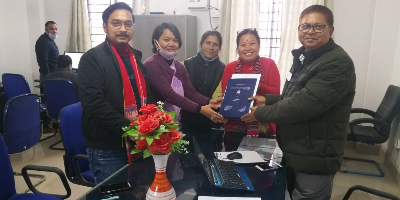
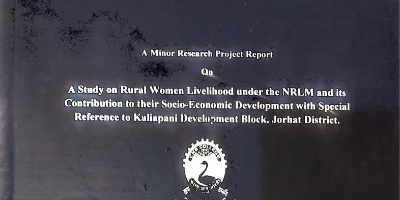
| Title: Inter Departmental Project on A Study on Rural Women Livelihood under the NRLM and its contribution to their Socio-Economic Development with Special Reference to Kaliapani Development Block, Jorhat District. | |
| Start Date: 2021-05-01 End Date: 2022-12-31 Duration: 8 days | |
| Nature of the Activity: Research Project | |
| Summary: <table align="center"><tbody><tr align="left"><td colspan="2"><font size="4" color="maroon"><strong><br><br>Summary: -</strong></font></td><td></td></tr> <tr align="justify"><td colspan="2"><font size="4" color="blue"><div><span style="font-family: "times new roman", serif; font-size: medium; color: rgb(0, 0, 0);">In present time women are starting to participate in economic activities. the modern women keenly</span></div><div><span style="font-family: "times new roman", serif; font-size: medium; color: rgb(0, 0, 0);">desires to enter in to a work career because they wants to work or because of the pressuring economic</span></div><div><span style="font-family: "times new roman", serif; font-size: medium; color: rgb(0, 0, 0);">needs of the family and to achieve higher standard of living the women participate in economic activities.</span></div><div><span style="font-family: "times new roman", serif; font-size: medium; color: rgb(0, 0, 0);">the economic participation of women is also leads to their better position in their family.</span></div><div><span style="font-family: "times new roman", serif; font-size: medium; color: rgb(0, 0, 0);">The study is mainly based on rural women livelihood source as per the NRLM and contribution in socio-</span></div><div><span style="font-family: "times new roman", serif; font-size: medium; color: rgb(0, 0, 0);">economic development of 4 villages under Kaliapani Development Block, Jorhat district of Assam. The</span></div><div><span style="font-family: "times new roman", serif; font-size: medium; color: rgb(0, 0, 0);">socio-economic condition of the villages is very poor. Most of the women of the area are undereducated</span></div><div><span style="font-family: "times new roman", serif; font-size: medium; color: rgb(0, 0, 0);">and unskilled, they are depended on agriculture, weaving, daily wages and livestock business such as</span></div><div><span style="font-family: "times new roman", serif; font-size: medium; color: rgb(0, 0, 0);">piggery, rearing silk worm, duck, goat etc. and they don’t use any modern technology for it. So they could</span></div><div><span style="font-family: "times new roman", serif; font-size: medium; color: rgb(0, 0, 0);">not produce their product in a large quantity. Even if they produce in a large quantity there is no market</span></div><div><span style="font-family: "times new roman", serif; font-size: medium; color: rgb(0, 0, 0);">place to sell the products. So the women are facing different problems for their socio-economic</span></div><div><span style="font-family: "times new roman", serif; font-size: medium; color: rgb(0, 0, 0);">development. So the study is focusing on the various schemes of NRLM in the study area which is</span></div><div><span style="font-family: "times new roman", serif; font-size: medium; color: rgb(0, 0, 0);">supporting women to develop their socio-economic condition.</span></div><div><span style="font-family: "times new roman", serif; font-size: medium; color: rgb(0, 0, 0);">Research Objectives:</span></div><div><span style="font-family: "times new roman", serif; font-size: medium; color: rgb(0, 0, 0);"> To understand the NRLM.</span></div><div><span style="font-family: "times new roman", serif; font-size: medium; color: rgb(0, 0, 0);"> To know the livelihood sources of women.</span></div><div><span style="font-family: "times new roman", serif; font-size: medium; color: rgb(0, 0, 0);"> To find out what are the available resources in the study area.</span></div><div><span style="font-family: "times new roman", serif; font-size: medium; color: rgb(0, 0, 0);"> To find out the issues affecting the economic condition of people.</span></div><div><span style="font-family: "times new roman", serif; font-size: medium; color: rgb(0, 0, 0);">Findings:</span></div><div><span style="font-family: "times new roman", serif; font-size: medium; color: rgb(0, 0, 0);">1. Most of the SHGs members attained school till primary level and 10% are illiterate and dropped</span></div><div><span style="font-family: "times new roman", serif; font-size: medium; color: rgb(0, 0, 0);">out because of the financial problem and they get engaged in household work and some of them</span></div><div><span style="font-family: "times new roman", serif; font-size: medium; color: rgb(0, 0, 0);">got married.</span></div><div><span style="font-family: "times new roman", serif; font-size: medium; color: rgb(0, 0, 0);">2. Most of the respondents are engaged in agriculture and daily wage earning.</span></div><div><span style="font-family: "times new roman", serif; font-size: medium; color: rgb(0, 0, 0);">3. All the respondents grow rice. Agriculture provides both income and food. Apart from rice they</span></div><div><span style="font-family: "times new roman", serif; font-size: medium; color: rgb(0, 0, 0);">produce various types of crops and vegetables such as mustard, pulses, potato and other seasonal</span></div><div><span style="font-family: "times new roman", serif; font-size: medium; color: rgb(0, 0, 0);">vegetables.</span></div><div><span style="font-family: "times new roman", serif; font-size: medium; color: rgb(0, 0, 0);">4. Now a day’s most of the people prefer to live in nuclear family in villages.</span></div><div><span style="font-family: "times new roman", serif; font-size: medium; color: rgb(0, 0, 0);">5. Most of the women are skilful in weaving. In the village majority of the women practice</span></div><div><span style="font-family: "times new roman", serif; font-size: medium; color: rgb(0, 0, 0);">traditional weaving method. They weave for their own use and only few women use it for income</span></div><div><span style="font-family: "times new roman", serif; font-size: medium; color: rgb(0, 0, 0);">purpose.</span></div><div><span style="font-family: "times new roman", serif; font-size: medium; color: rgb(0, 0, 0);">6. In the study area most of the respondents have 5-10 bighas of land.</span></div><div><span style="font-family: "times new roman", serif; font-size: medium; color: rgb(0, 0, 0);"><br></span></div><div><span style="font-family: "times new roman", serif; font-size: medium; color: rgb(0, 0, 0);">7. The monthly income of the respondent is 6000-1000 which is not sufficient for their living in the</span></div><div><span style="font-family: "times new roman", serif; font-size: medium; color: rgb(0, 0, 0);">village.</span></div><div><span style="font-family: "times new roman", serif; font-size: medium; color: rgb(0, 0, 0);">8. Most of the respondent rear livestock for income generation and household uses. They sell their</span></div><div><span style="font-family: "times new roman", serif; font-size: medium; color: rgb(0, 0, 0);">livestock and crops to local vendors but they are not getting the reasonable price. Most of the</span></div><div><span style="font-family: "times new roman", serif; font-size: medium; color: rgb(0, 0, 0);">respondents earn Rs. 3000 to 50000 yearly by selling livestock.</span></div><div><span style="font-family: "times new roman", serif; font-size: medium; color: rgb(0, 0, 0);">9. The respondents are below poverty line (BPL). Most of the respondents belong to ST and OBC</span></div><div><span style="font-family: "times new roman", serif; font-size: medium; color: rgb(0, 0, 0);">category.</span></div><div><span style="font-family: "times new roman", serif; font-size: medium; color: rgb(0, 0, 0);">10. The respondents are economically backward because they don’t have any good income source</span></div><div><span style="font-family: "times new roman", serif; font-size: medium; color: rgb(0, 0, 0);">most of the respondents engaged in cultivation.</span></div><div><span style="font-family: "times new roman", serif; font-size: medium; color: rgb(0, 0, 0);">11. Most of the respondents use manure from livestock on the soil to increase their crop production.</span></div><div><span style="font-family: "times new roman", serif; font-size: medium; color: rgb(0, 0, 0);">12. In the study area natural resources are river and forest, from where they get fish and water for</span></div><div><span style="font-family: "times new roman", serif; font-size: medium; color: rgb(0, 0, 0);">agriculture and from the forest they collect wood for cooking.</span></div><div><span style="font-family: "times new roman", serif; font-size: medium; color: rgb(0, 0, 0);">13. Most of the respondents use tractors as a tool for their agriculture and some respondent use both</span></div><div><span style="font-family: "times new roman", serif; font-size: medium; color: rgb(0, 0, 0);">tractor and bullock as agricultural tool.</span></div><div><span style="font-family: "times new roman", serif; font-size: medium; color: rgb(0, 0, 0);">14. The respondents are not aware about NRLM scheme because of the lack of education .</span></div><div><span style="font-family: "times new roman", serif; font-size: medium; color: rgb(0, 0, 0);">15. The respondents are very few NRLM schemes, but they are not implemented properly by the</span></div><div><span style="font-family: "times new roman", serif; font-size: medium; color: rgb(0, 0, 0);">concern authority.</span></div><div><span style="font-family: "times new roman", serif; font-size: medium; color: rgb(0, 0, 0);">16. Due to household work the respondents did not get much time to attend workshop[ of SHGs,</span></div><div><span style="font-family: "times new roman", serif; font-size: medium; color: rgb(0, 0, 0);">which is also a reason for lack of awareness about the scheme.</span></div><div><span style="font-family: "times new roman", serif; font-size: medium; color: rgb(0, 0, 0);">17. Participation of the government official from the grassroots level is very less.</span></div><div><span style="font-family: "times new roman", serif; font-size: medium; color: rgb(0, 0, 0);">18. Many SHG members did not get exposure of any market.</span></div><div><span style="font-family: "times new roman", serif; font-size: medium; color: rgb(0, 0, 0);">19. There are many SHGs who have got Fund from NRLM schemes but they did not utilize the funds</span></div><div><span style="font-family: "times new roman", serif; font-size: medium; color: rgb(0, 0, 0);">for SHG. They divided the funds among the members and became inactive.</span></div><div><span style="font-family: "times new roman", serif; font-size: medium; color: rgb(0, 0, 0);">20. Many SHGs are not linked with banks.</span></div></font></td></tr></tbody></table> | |
 |  |